
CoRe’s Research Project 5 Welcomed Leading International Researchers in the Fields of Economics and Cognitive Sciences to the Faculty of Arts, Charles University
During September 2026, a series of five lectures took place at the Faculty of Arts, Charles University, attended by leading international researchers from the fields of experimental economics, cognitive science, finance, and legal economics. The lectures were held as part of the Research Project 5 – Conflict and Manipulation, which focuses on the influence of cognitive and framing biases and the building of systemic and social resilience.
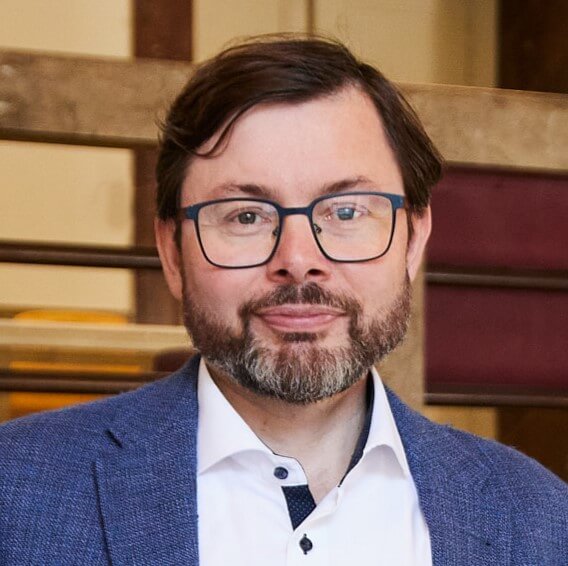
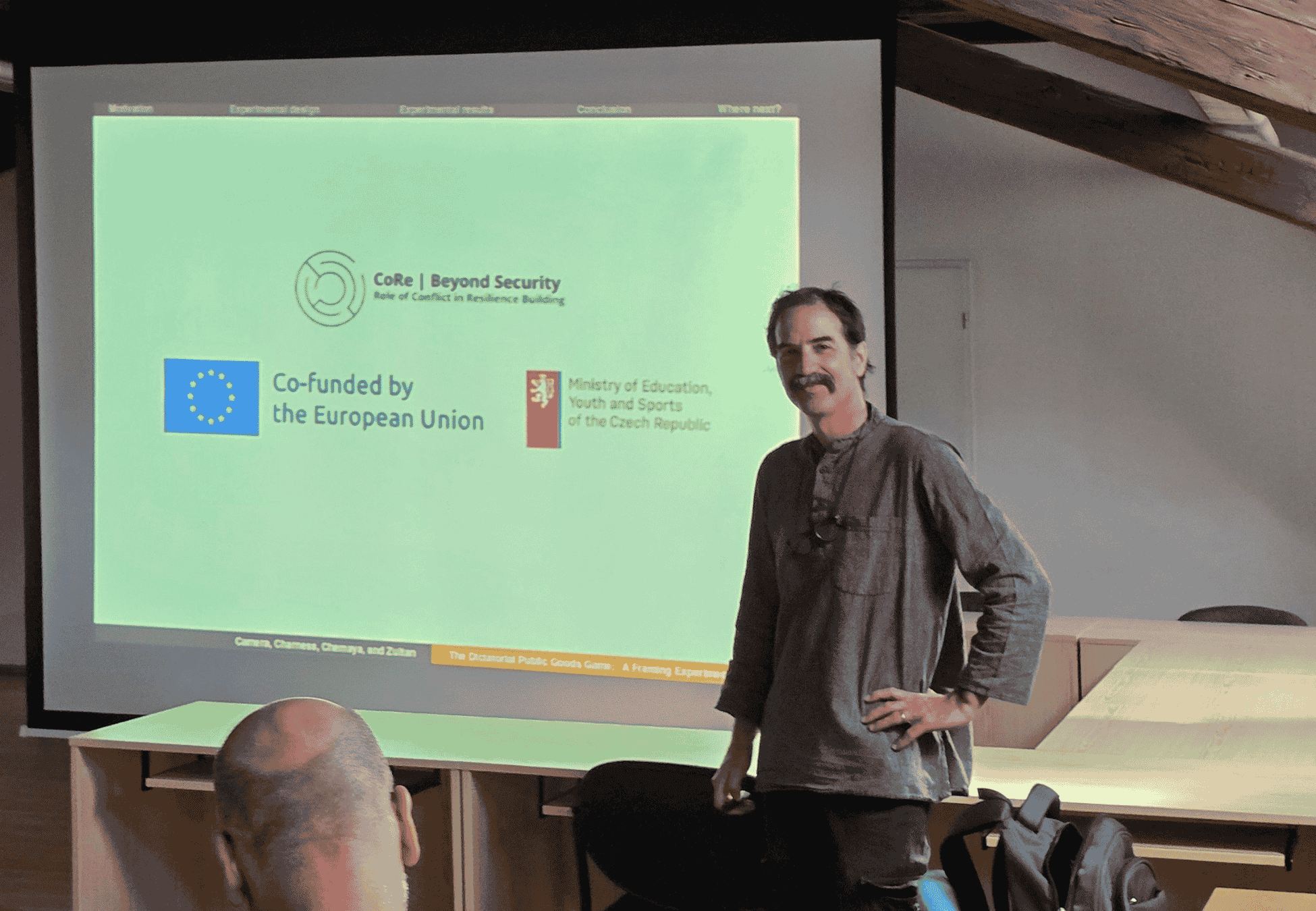
Dr Ro’i Zultan’s (Ben-Gurion University of the Negev) lecture and consultation, entitled “The Dictatorial Public Goods Game: A Framing Experiment”, examined how centralised resource management and framing influence the protection of public goods, pro-social behaviour, and the creation of social capital.
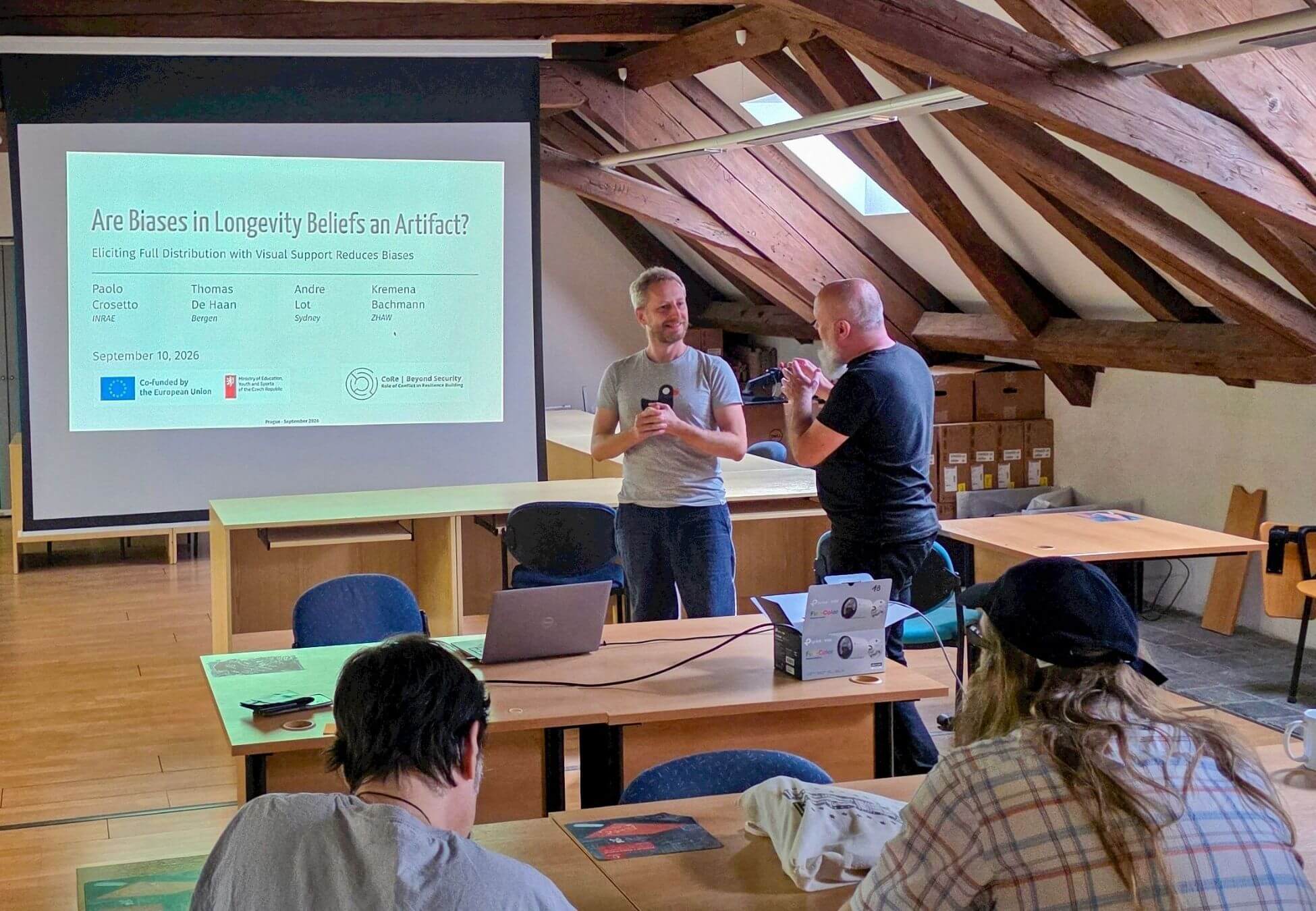
Dr Paolo Crosetto (INRAE-GAEL, Grenoble), in his lecture “Are Biases in Longevity Beliefs Elicitation an Experimental Artifact?”, presented research showing that apparent biases in estimates of life expectancy are largely a methodological artefact and that intuitive visual aids (PDF interface) significantly improve the accuracy of human judgement.
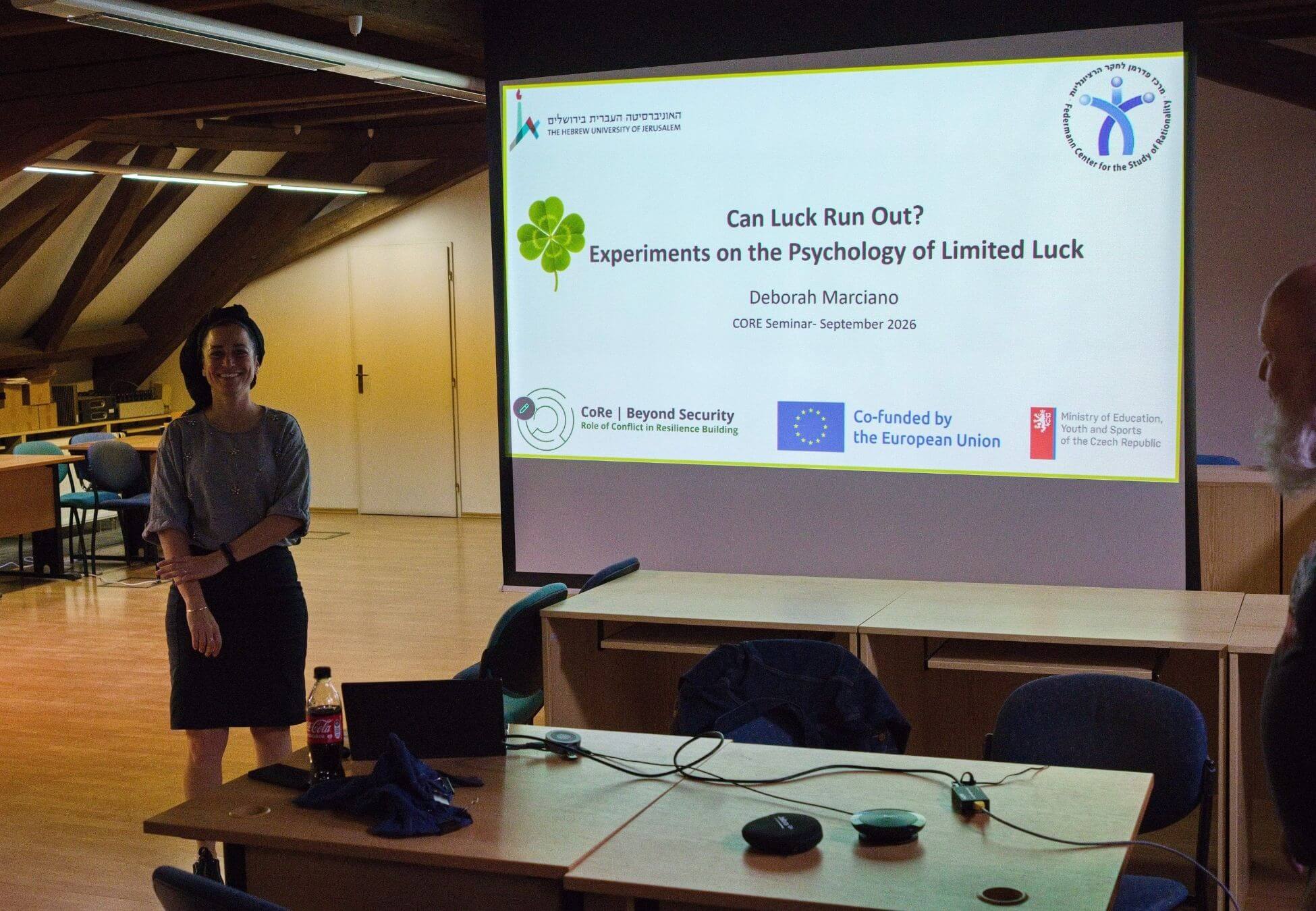
In her lecture “Can Luck Run Out? Experiments on the Psychology of Limited Luck”, Dr Deborah Marciano (Center for the Study of Rationality, Hebrew University of Jerusalem) examined the cognitive bias relating to the perception of luck as a finite resource (Limited Luck Belief). Research shows how this bias leads to suboptimal decisions (e.g., in investment or risk assessments) and how understanding it helps to strengthen both psychological and economic resilience.
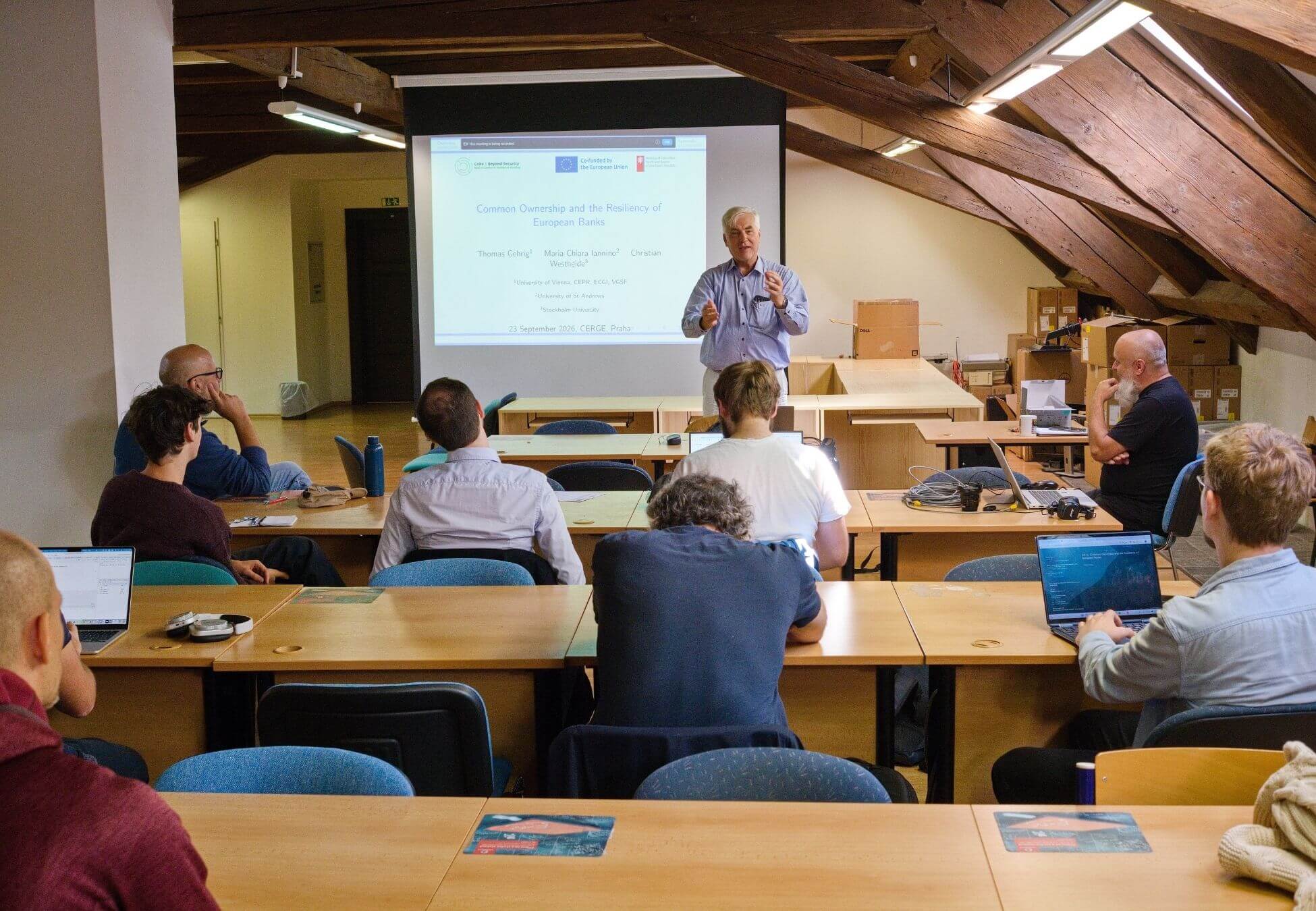
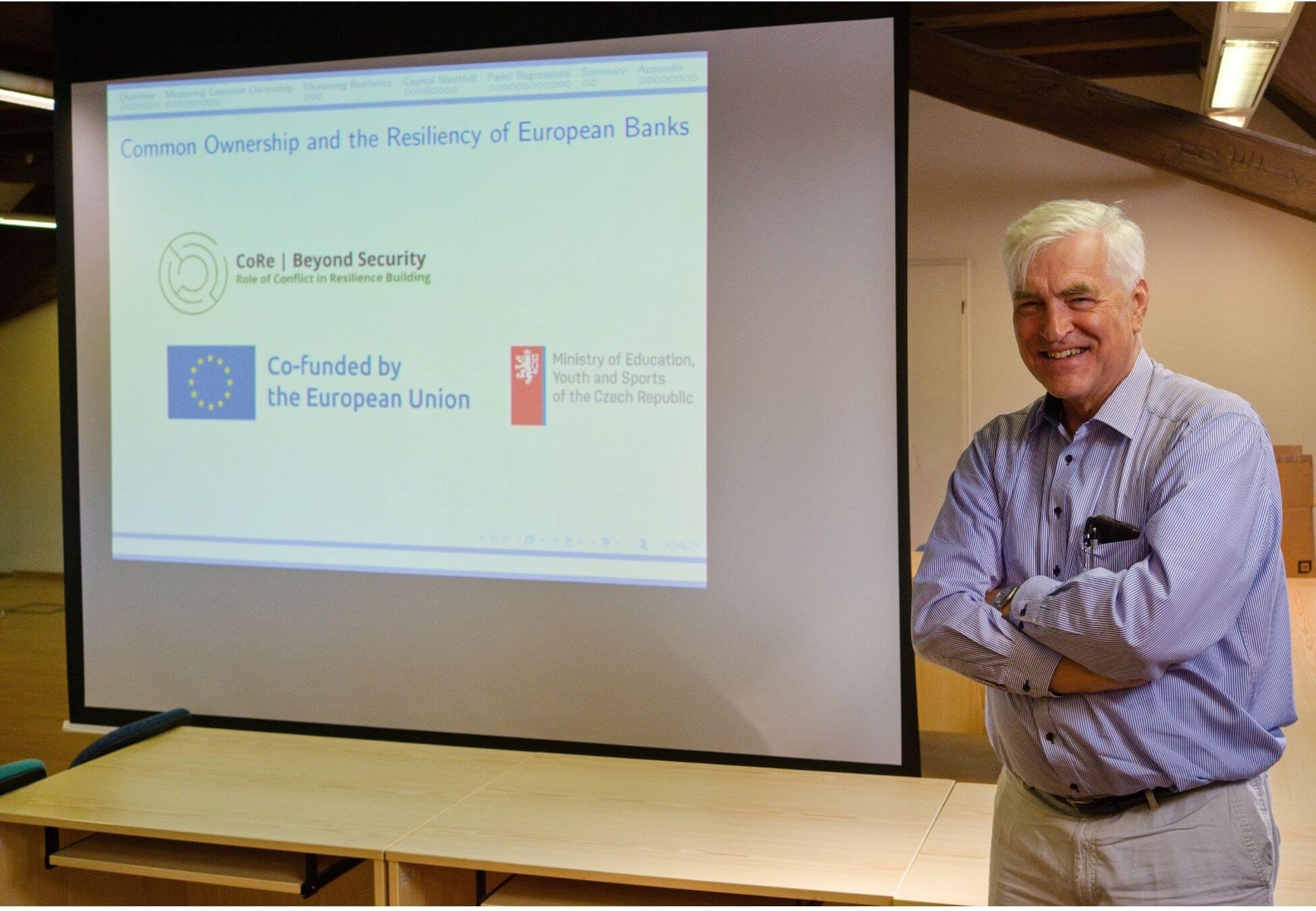
Prof. Thomas Gehrig (University of Vienna), in his lecture “Common Ownership and the Resiliency of European Banks’, analysed the impact of common ownership on the vulnerability of the European banking sector in times of crisis and outlined possibilities for strengthening systemic financial stability and market resilience.
In his lecture “Do German Judges Treat People With Foreign Names Differently?”, Prof. Alexander Morell (Goethe University Frankfurt / SAFE) examined an experiment involving German judges, investigated the presence of implicit biases in the assessment of criminal cases, and demonstrated the key role of consistency in the evidence for fair decision-making.
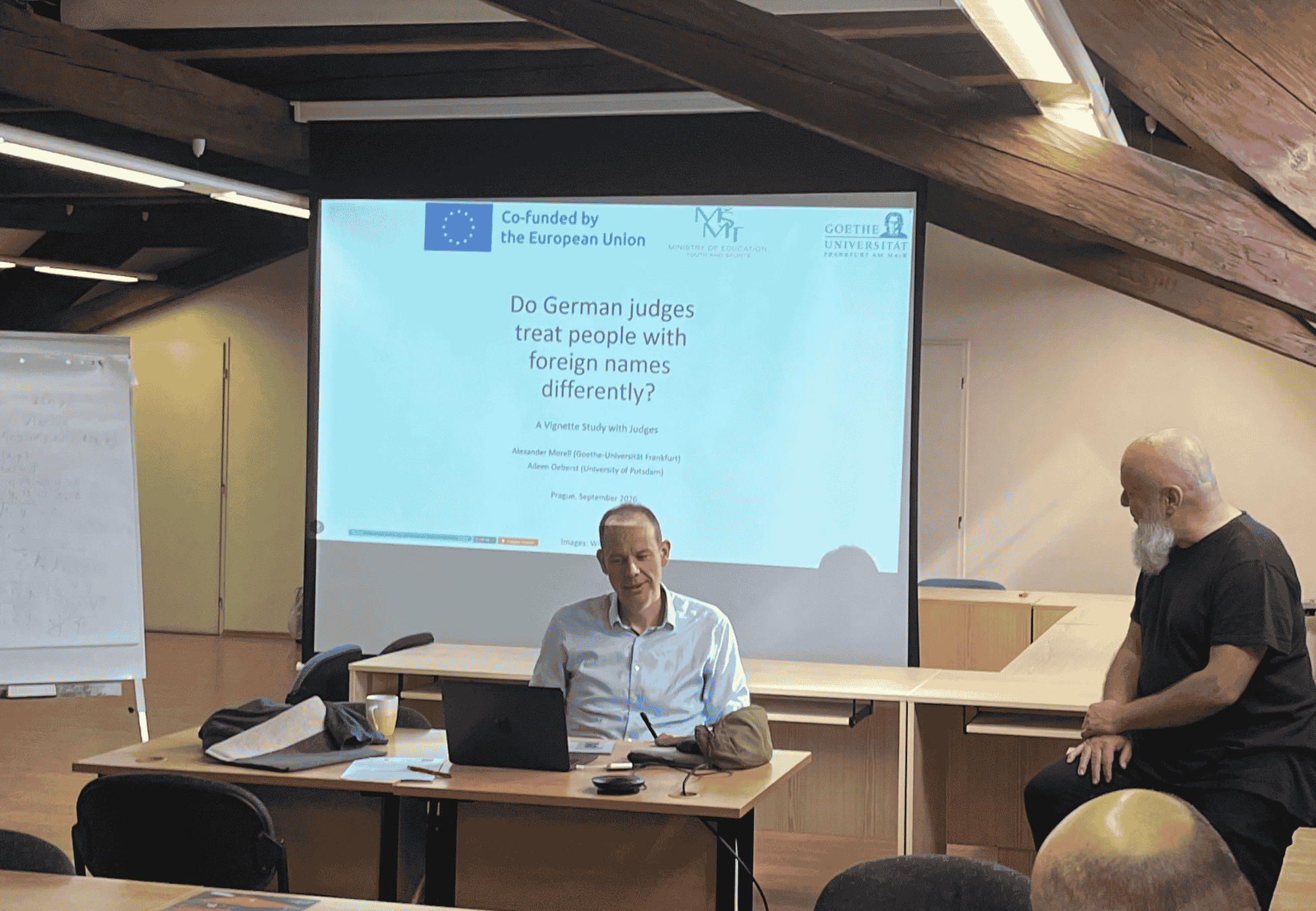
Photo: Milan Zajíček and Josef Šlerka